Leak Under Your Kitchen or Bathroom Sink? What To Do First
Water in the cupboard beneath a sink is frustrating, but the source is often straightforward. Here is how to limit damage, recognise the likely area and know when it is time to arrange a repair.
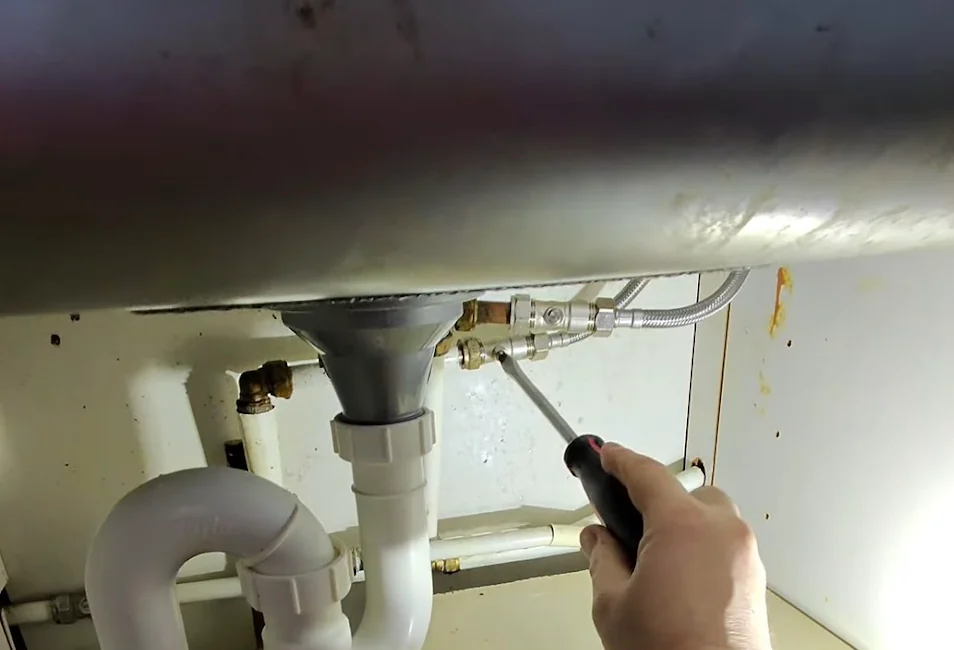
First, limit the damage
Remove cleaning products, food or anything absorbent from the cupboard. Put a bowl, tray or towel below the drip and stop using the sink until you understand whether the leak only happens while water is draining or continues when everything is off. Avoid forcing any small valve or tightening every fitting at random.
Waste pipe or trap
Usually leaks when the sink is drained. Look for water around the plastic trap, compression joints or waste outlet.
Tap supply connection
May drip even when the tap is off. Flexible tap tails, service valves and small compression fittings are common areas.
Appliance connection
Often shows only when a dishwasher or washing machine pumps out. Check the hose connection to the trap without pulling it apart.
Is it a waste leak or a water-supply leak?
The timing is often the best clue. Water that appears only when the bowl is emptied commonly points to the waste outlet, trap or a joint on the drain side. A drip that continues with the taps off can point to a tap tail, isolation valve or another pressurised supply connection.
Safe observation only
Use a torch and look for the first point where water appears. Do not put your hand around electrical sockets, appliances or extension leads, and do not dismantle a fitting just to find the source.
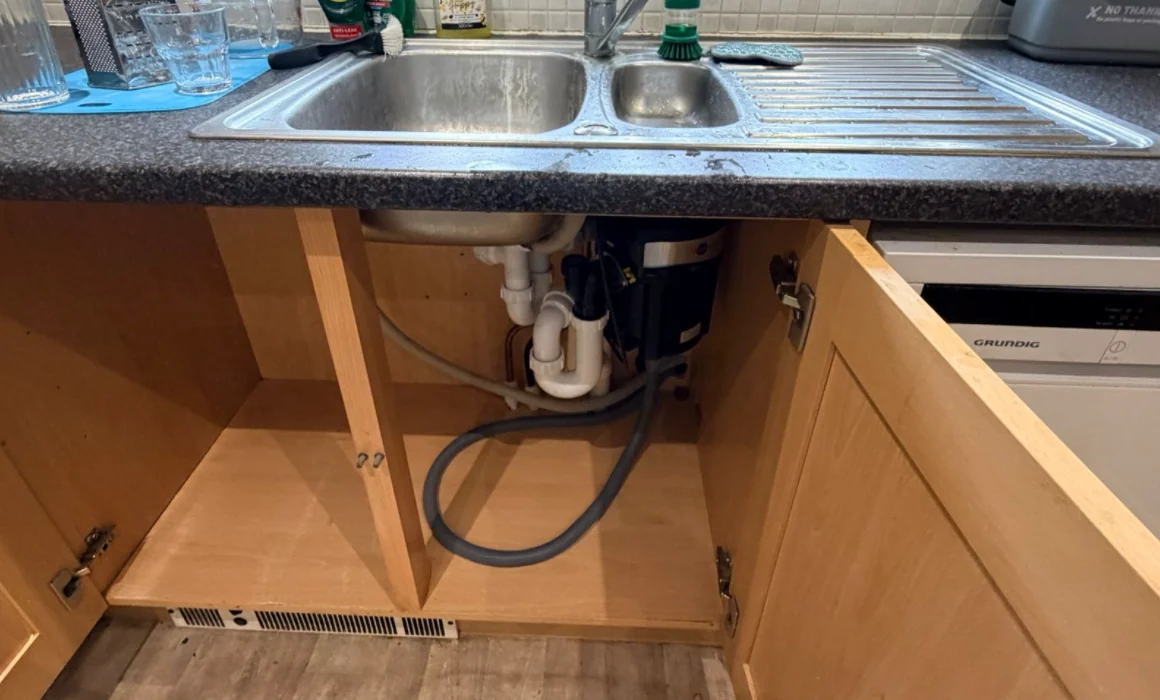
The common under-sink trouble spots
- Trap and waste joints: a displaced washer, cross-threaded fitting or disturbed connection can drip each time the sink drains.
- Flexible tap tails: these connect the tap to the water supply and can weep from a nut, hose or nearby service valve.
- Isolation valves: an old valve may seep around its spindle or compression fitting, especially after it has been moved.
- Appliance waste hoses: dishwashers and washing machines can expose a weak hose connection only when they discharge water.
When to stop and call a plumber
Arrange help promptly if the leak is continuous, the cupboard base is swelling, a valve is seized or dripping, water is near electrical equipment, or you cannot clearly identify the source. A small under-sink drip can cause disproportionate damage to cabinets and flooring if it is left.
A useful photo can speed up the assessment
Take one wider photo of the open cupboard and one close photo of the first point where you can see water. Include the trap, supply pipes and any appliance hose if they are nearby. Flow Right can review the information and let you know whether a fixed price can be provided before any work is agreed.
A simple order of action
- 1Stop using the sink and protect the cupboard contents.
- 2Contain the water with a bowl or towel if it is safe to do so.
- 3Observe whether it leaks only when water is drained or also with taps off.
- 4Take clear photos without forcing valves or dismantling pipework.
- 5Call if the leak is ongoing, near electrics, or likely to damage the cabinet or floor.
Frequently asked questions
What should I do first if water is leaking under my sink?
Stop using the sink, empty the cupboard of anything that can be damaged, place a bowl or towel beneath the leak and take clear photographs. If water continues to run with the tap off, or is reaching electrical items, arrange urgent help rather than investigating further.
How can I tell whether an under-sink leak is from the waste pipe or the water supply?
A waste-pipe leak normally appears when the sink is being used or immediately afterwards. A leak from a tap connection, flexible hose or isolation valve may continue even when the tap is off. Do not force fittings or valves if you are unsure.
Can I tighten a leaking sink trap myself?
If a plastic trap fitting is visibly loose and turns freely by hand, a gentle hand-tightening check may be reasonable. Do not use excessive force, grips or sealant on a fitting you do not understand, because distorted seals and cracked plastic can make a small leak worse.
Why does my kitchen sink only leak when the dishwasher or washing machine runs?
The appliance waste hose, its connection to the sink trap, or the trap itself may be leaking when water is discharged. Switch the appliance off, avoid further cycles and photograph the hose and trap connection before arranging a repair.
Do you repair leaks under sinks in Ashford?
Yes. Flow Right Plumbing repairs under-sink leaks across Ashford and the surrounding villages, including waste fittings, traps, tap tails, isolation valves and appliance waste connections. A clear photograph helps us assess the likely work before a fixed price is agreed.
Related pages
Leak still causing trouble?
Send a photo of the pipework and leak area on WhatsApp. Flow Right can review the details and confirm whether a fixed price can be provided before any work is agreed.
Fixed prices agreed before work starts · One-year workmanship guarantee
Related help
Leak problem? Find the right repair route.
Use the relevant guide, check the leak-repair service or upload a clear photo of the affected area for assessment.
You can also send a photo on WhatsApp if that is easier.