Why Won't My Toilet Flush Properly?
If the button or handle does nothing, the flush is weak, or it only works after several presses, the fault is often inside the cistern. Here is how to separate the main symptoms and when to arrange a repair.
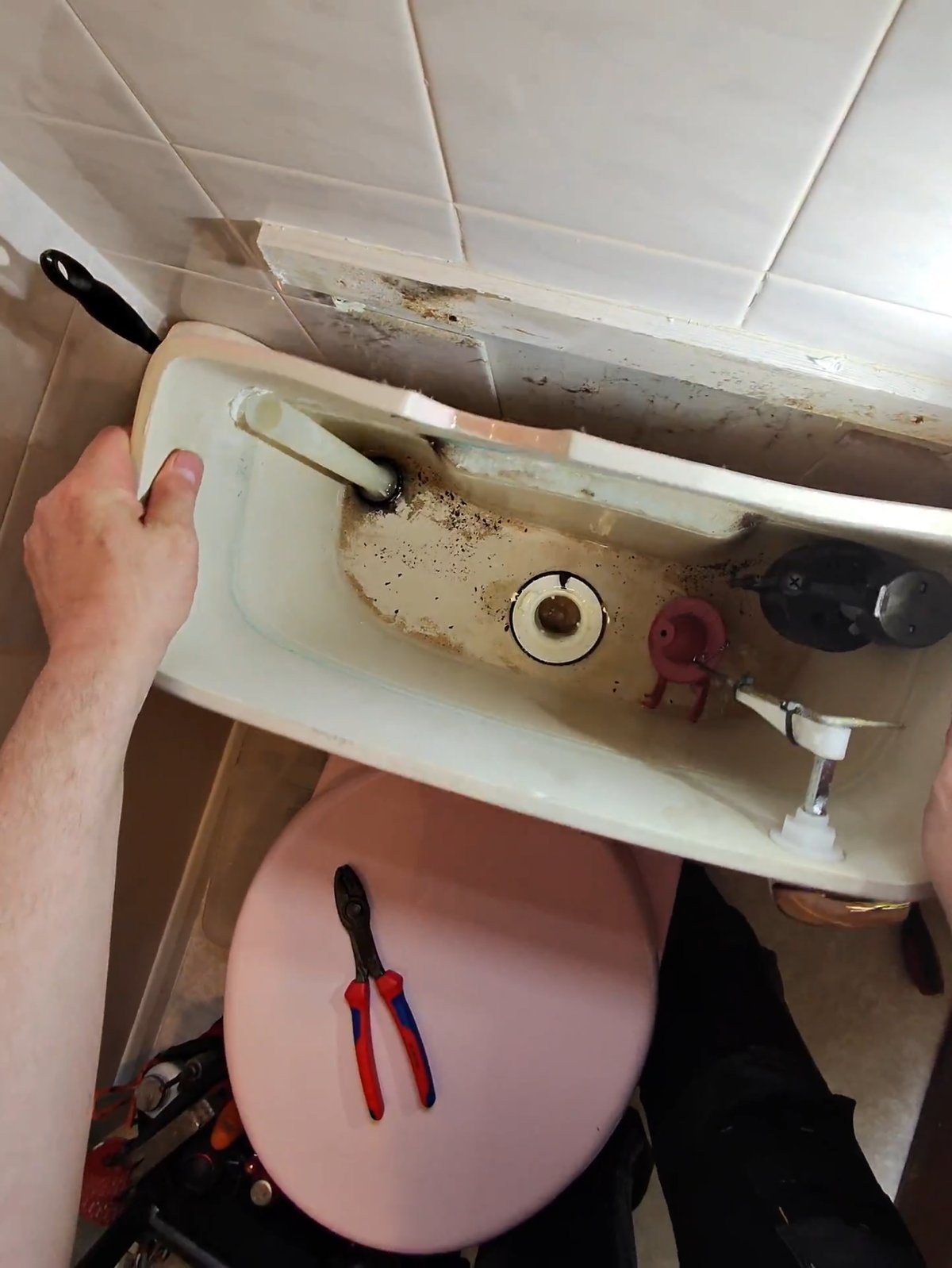
Start by separating the symptom
A toilet that will not release water from the cistern is usually a button, handle, linkage, flush-valve or siphon issue. A toilet that flushes but has very little water in the cistern may have a refill issue instead. If the bowl water rises or drains very slowly, stop re-flushing: that can indicate a blockage rather than a cistern mechanism fault.
No flush at all
The button or handle moves but does not release water from the cistern.
Weak or incomplete flush
Not enough water is released, or the valve or siphon does not open fully.
Bowl level rises
Stop flushing and do not treat this as a button fault until the water can drain safely.
Cause 1 — A button, handle or linkage fault
On a close-coupled toilet, a push button or handle operates an internal linkage. That linkage can come loose, snap, wear or jam. The usual clue is that the button feels unusually loose, has no resistance, stays down, or clicks without starting a flush.
Safe check
If the cistern lid is easy to lift, take a clear photo of the button or handle and the mechanism below it. Do not keep forcing a stiff button and do not dismantle a dual-flush assembly just to investigate.
Cause 2 — A tired flush valve or siphon
The flush valve or siphon is the part that actually releases water into the bowl. When it is worn, partly jammed or no longer lifting far enough, the toilet may only deliver a weak flush, stop part way through or need several attempts. These are common repair items and are normally assessed against the cistern type and available parts.
Cause 3 — The cistern water level is too low
A toilet can appear to be flushing poorly even when the button and valve are working. If the cistern has not refilled to its normal level, there may simply be too little water available for a proper flush. This is more likely if refilling has become slow or unreliable.
Read the toilet-cistern refill guideIf the bowl is not clearing
A weak flush and a blockage can feel similar, but the next step is different. If water rises in the bowl, drains unusually slowly or looks likely to overflow, stop operating the flush. Allow the level to settle, keep the bathroom in use only if safe, and avoid repeatedly adding chemical cleaners or forcing the flush mechanism.
Important: if there is an overflow risk or wastewater escaping, call Flow Right directly on 01233 216070 rather than waiting for a photo assessment.
When to arrange a toilet repair
- The button or handle does nothing, sticks or needs several presses
- The cistern is full but the flush is weak or stops part way through
- The toilet has a concealed or wall-hung cistern behind a flush plate
- There are several faults at once, such as poor flushing and a leak
- The bowl water rises, drains poorly or may overflow
Repair or replacement?
Where the mechanism and parts can be identified, the practical route is usually to repair or replace the worn flush component. A concealed cistern, unidentified parts or several unrelated faults may need an inspection first. Full toilet replacement is normally considered only where the toilet or concealed mechanism is obsolete, damaged or no longer economical to repair.
For a quicker assessment, send a photo of the complete toilet, a photo inside an accessible cistern, and a short video showing what happens when you try to flush.
Frequently asked questions
Why does nothing happen when I press my toilet flush button?
The button, handle, linkage or cable may have become disconnected, worn or jammed. On some toilets the button operates a flush valve directly; on others it lifts a siphon or valve through a separate linkage.
Why is my toilet flush weak?
A weak flush can be caused by a low cistern water level, a flush valve or siphon that is not opening fully, or a restricted outlet. It is different from a toilet that will not refill after flushing, although both symptoms can occur together.
Why does my toilet need several presses to flush?
A repeated-press fault usually points to a worn push-button mechanism, loose linkage, tired flush valve or siphon. Repeatedly forcing the button can cause more damage, so it is sensible to stop and arrange an assessment.
Is a poor flush always a blockage?
No. If the cistern does not release enough water, the flush can be weak even when the waste pipe is clear. If the bowl water rises, drains unusually slowly or looks likely to overflow, stop flushing and contact a plumber rather than repeatedly operating the mechanism.
Can I inspect the cistern myself?
If the cistern lid is clearly accessible, you can take a photo of the button or handle and the internal parts without dismantling anything. Do not force stiff components, alter water settings or remove a concealed flush plate unless you know how it is secured.
Do you repair toilets that will not flush in Ashford?
Yes. Flow Right Plumbing repairs domestic toilet flush mechanisms across Ashford and the surrounding villages, including buttons, handles, linkages, flush valves, siphons and related cistern faults. A photo or short video helps identify the likely repair before work is agreed.
Related pages
Toilet still won't flush?
Send a clear photo or short video of the flush attempt. Flow Right can review the details and let you know whether a fixed price can be provided before any work is agreed.
Fixed prices agreed before work starts · One-year workmanship guarantee
Related help
Toilet problem? Start with the right next step.
Read the guide that matches the symptom, see the repair service, or upload a photo or video and a short description for assessment first.
You can also send a photo on WhatsApp if that is easier.